
Mandals Drag Hose vs. Other Drag Hoses: Price, Durability, and Performance Compared
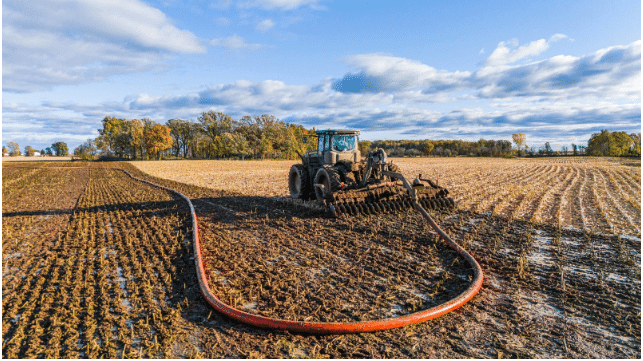
Mandals drag hose in real field use, built for long-distance slurry application with high durability and flexibility.
Drag Hoses
Choosing a drag hose for manure application or industrial slurry systems requires more than comparing price tags. Materials, construction, and long-term performance all impact how well a hose holds up under demanding field conditions. This comparison breaks down how Mandals Drag Hose measures against typical drag hoses on the market, focusing on three key categories: price, durability, and real-world performance. The goal is simple—help you determine which option offers the best value over the life of your system.
Pricing – Initial Costs and the Big (Long-Term) Picture
Mandals’ Dragman series is positioned in the premium segment of the drag hose market. These hoses are manufactured with high-grade thermoplastic polyurethane (TPU), tightly woven reinforcement layers, and engineering designed for high tensile strength and superior abrasion resistance.
Because of these materials and production standards, Mandals hoses cost more up front than many standard drag hoses. In contrast, budget options often use rubber blends or lighter reinforcement that reduce price but also reduce lifespan.
When evaluating cost, it’s important to consider lifecycle value—including avoided downtime, fewer replacements, reduced risk of bursts, and lower maintenance needs.
How They’re Built: Construction and Durability
The construction of a drag hose directly affects how it performs under stress. Mandals designs its Dragman series specifically for long-distance, high-flow, high-abrasion applications. Their Standard, Premium, and Extra Performance grades increase in strength and resistance based on use case.
Common lower-cost hoses may work for lighter or infrequent applications, but they typically:
- Use softer or less abrasion-resistant materials
- Have fewer reinforcement layers
- They are more likely to develop wear points or punctures
- Lose flexibility or shape faster
During real-world operation—dragging across rocky ground, turning around terraces, or running long distances—these construction differences show up quickly. A hose designed for heavy-duty use simply lasts longer.
Field Performance: Applicability and Efficiency in the Field
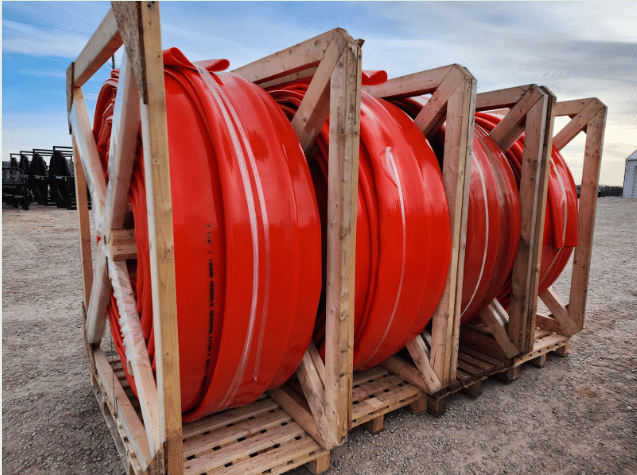
Mandals Dragman hose reels ready for industrial and agricultural slurry systems with premium build quality.
Performance determines whether your system runs smoothly day after day. Key factors include:
- Kink resistance
- Tensile strength
- Resistance to diameter expansion (important for flow efficiency)
- Ability to maintain shape under pressure and stress
- Longevity under repeated dragging
Mandals hoses are engineered for low kink radius, minimal swelling, and stable flow at high pressures. Their Premium models handle tight turns and tough terrain, while higher-grade hoses offer even more abrasion resistance for long pulls and heavy use.
Final Thoughts
Choosing between Mandals’ Dragman hoses and lower-cost drag hoses comes down to how tough your conditions are and how much reliability matters to your operation.
- Heavy use, rough terrain, long runs, or high flow? A premium hose delivers value through fewer replacements and more reliable performance.
- Light or occasional use on mild terrain? A budget hose may be sufficient, as long as you’re prepared for a shorter lifespan and more frequent replacement.
In most professional agricultural and industrial slurry systems, the stronger, better-engineered hose often proves to be the more economical choice over time.
Thinking of upgrading your slurry system? Learn why farmers trust Mandals Dragman Series for long-lasting performance and reliability. Read the full comparison on Facebook to make the smartest investment!
Trending FAQs
- How much more expensive is a Mandals Dragman hose than a regular drag hose?
While pricing varies by diameter and length, Mandals hoses generally cost more because of higher-grade materials and reinforcement. It’s best to compare quotes based on total lifecycle cost—not just purchase price. - Will a cheaper drag hose last in my slurry system?
Possibly—if your runs are short, your terrain is smooth, and your use is infrequent. In heavier applications, low-cost hoses typically wear out faster. - How long does a Mandals Dragman hose last?
Mandals designs its hoses for long service life with strong UV, abrasion, and weather resistance. Actual lifespan depends on terrain, handling practices, and operating hours. - How do you maintain drag hoses of any brand?
Regular inspection is essential. Look for cuts, abrasion spots, exposed reinforcement, or flat spots. Clean after use, avoid storing wet for long periods, and prevent dragging across sharp edges. - When is it worth investing in a premium hose like Mandals?
Premium hoses are ideal for rocky fields, steep grades, long drags, frequent usage, or high-flow operations where hose failure would cause costly downtime or missed application windows.