From Field Edge to Pit: How Mandals Drag Hose Design Impacts Pump Efficiency and Fuel Use
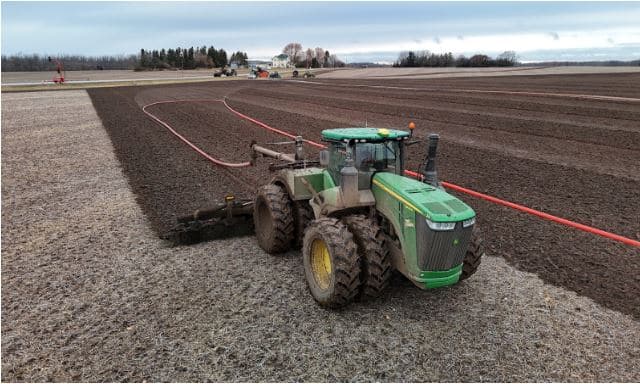
Mandals drag hose system supports smooth slurry flow, stable pressure, and lower fuel use during field application
Mandals Drag Hose Design
Fuel efficiency during slurry application is heavily influenced by how drag hose systems are designed and deployed. Operators often notice rising fuel costs even when output stays the same. In many cases, the issue doesn’t start at the pump—it starts at the field edge. Mandals drag hose design systems play a critical role in how pressure, flow, and energy are transferred throughout the system, directly impacting pump load and fuel consumption.
Why Drag Hose Design Matters, and You Didn’t Even Know It
A drag hose connects the pump to the application toolbar across long distances. As hose length increases, friction losses rise, reducing flow efficiency. Poor hose selection or layout forces pumps to work harder to maintain output. Increased resistance directly translates into higher fuel consumption. Proper drag hose design minimizes friction loss and stabilizes system pressure, allowing pumps to operate efficiently instead of under constant strain.
Flow dynamics from the field edge to the pit perception
Manure flow is governed by pressure, velocity, and distance. As slurry moves through the hose, friction develops along the hose wall. Losses increase at couplings, bends, elevation changes, and diameter transitions. Each restriction requires additional pump energy. Smooth internal hose linings help maintain consistent flow, while uniform diameters reduce turbulence. Gradual curves prevent sudden pressure changes, supporting efficient energy transfer over long hose runs.
Influence of Pump Load and Fuel Consumption.
Pump efficiency is directly affected by hose resistance. As resistance rises, pumps draw more power to maintain flow. Engines respond by burning more fuel per hour. Matching drag hose specifications—diameter, pressure rating, and length—to pump capacity keeps the load stable. When pumps operate within their optimal range, fuel use decreases while throughput remains consistent. This balance extends equipment life and reduces unplanned downtime.
Distribution and Layout Affects Daily Use
Field layout influences hose performance every day. Longer hose routes increase friction losses. Elevation changes require additional pressure to maintain flow. Poor routing forces pumps to operate inefficiently. Planning hose paths to minimize distance, sharp bends, and steep elevation changes reduces system strain. Even small layout adjustments can result in measurable fuel savings over the course of an application season.
Effects of Hose Weight and Interaction with Ground
Hose weight and ground contact affect resistance and system stability during manure application. Excess drag increases stress on tractors, toolbars, and hose connections. Uneven terrain introduces pressure fluctuations that disrupt flow. Modern drag hose systems prioritize flexibility and durability to reduce ground resistance in manure application operations. Improved flexibility allows smoother movement across fields and maintains consistent flow at varying travel speeds.
Between-Surgery Efficiency Improvements with Better Design
During active application, consistent pressure is essential for accurate nutrient placement. Well-designed drag hose systems help maintain steady flow, reducing the need for constant pump speed adjustments. Predictable pressure results in stable fuel use and uniform manure distribution. This consistency improves nutrient placement, supports crop performance, and enhances overall operational efficiency.
Wear and Maintenance Clip Fuel Use
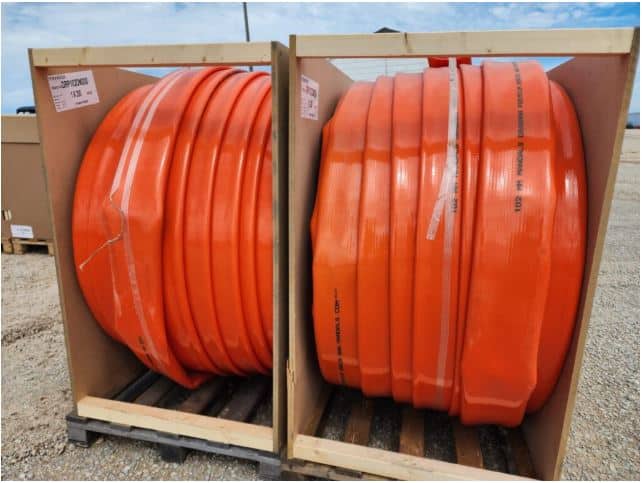
Durable Mandals drag hose coils engineered for smooth internal flow and reduced pump load during manure application
As hoses wear, internal surfaces become rougher, increasing friction and pressure loss. Pumps must compensate by working harder, consuming more fuel. Regular inspections help identify wear before efficiency drops. Replacing worn sections restores smooth flow and protects pump performance. Preventive maintenance supports fuel efficiency and reduces long-term operating costs.
Interaction with Manure Handling Equipment
Drag hose systems must be properly matched with manure pumps and application equipment. Mismatched components create bottlenecks that push pumps outside their efficient operating range. Proper alignment of hose size, fittings, and pump capacity promotes steady suction and discharge. This reduces cavitation risk and energy loss, allowing the entire system to function as a unified, efficient operation.
Long-Term Financial Benefits of Efficient Design
Fuel savings compound over time. Reduced pump stress leads to fewer repairs and longer equipment life. Efficient systems also shorten application time, lowering labor costs. While high-quality hose systems require upfront investment and may impact the Drag Hose Price, they deliver predictable performance and long-term cost control. Efficiency becomes a daily advantage rather than a constant challenge.
Summary: The Hose is where Efficiency Begins
From the field edge to the pit, drag hose design decisions shape system performance. Mandals drag hose systems influence pressure stability, flow consistency, and fuel consumption every day. Thoughtful hose selection and layout protect pump efficiency and prevent operating costs from escalating.
A drag hose is more than a pipeline—it’s the foundation of fuel efficiency. Poor layouts increase resistance and fuel use. Mandals Drag Hose systems maintain stable pressure and smooth flow for better results. Read more on Instagram
Frequently Asked Questions
What is the relationship between drag hose diameter and pump efficiency?
Hose diameter affects friction loss and pressure drop. Proper sizing keeps pumps operating near their optimal efficiency range.
Can the design of the layout of hoses really make a difference to fuel consumption?
Yes. Shorter routes with fewer bends and elevation changes reduce resistance and fuel use.
Why is elevation change a concern in slurry transfer?
Elevation increases pressure requirements, forcing pumps to work harder to move manure uphill.
How frequently are we to check the drag hoses?
Hoses should be inspected before each application season and monitored throughout use.
Does the smoother hose cause better flow?
Yes. Smooth internal linings reduce friction, improve flow efficiency, and extend pump life.