
Key Benefits of Using a Manure Dumpster for Large Livestock Operations
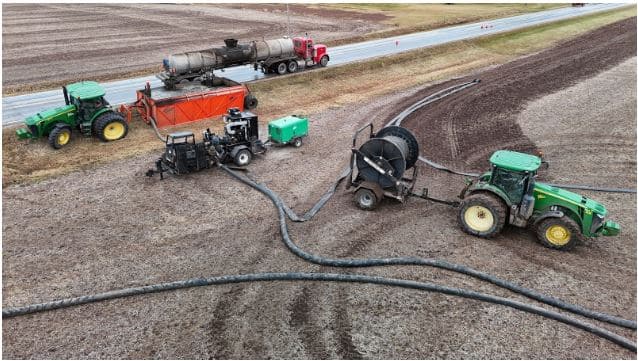
Liquid manure dumpster placed at the field edge to improve hauling efficiency and reduce soil compaction
Manure Dumpster for Large Livestock
Managing high volumes of liquid manure on large livestock operations is a constant logistics challenge—especially when you’re trying to keep semis moving, limit soil compaction, and stay on top of narrow application windows. A manure dumpster (transfer dump station) gives you a clean, efficient way to receive, hold, and transfer liquid manure at the field edge or roadside. When paired with semi tankers, portable storage, and dragline or irrigation systems, a manure dumpster for Large Livestock becomes a key link in a streamlined manure handling system that keeps haulers moving and application equipment running.
What Is a Manure Dumpster?
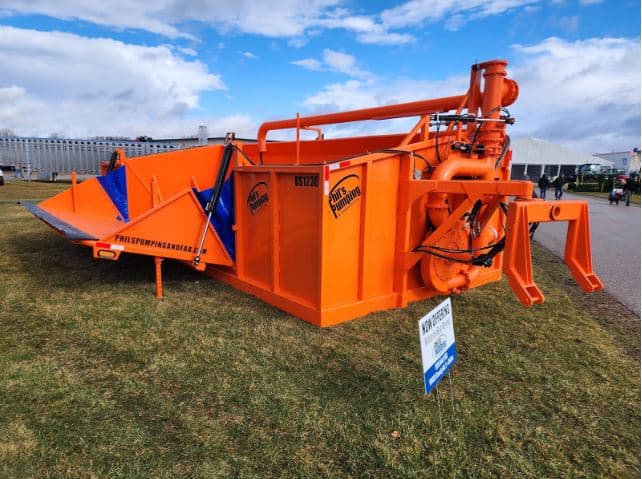
In this context, a manure dumpster is a liquid manure transfer dump station—a heavy-duty steel tank designed to be placed near the road or field entrance, where semi tankers or spreaders can quickly unload.
At Phil’s Pumping & Fabrication, these transfer dump stations:
- They typically 10,000–16,000 gallons in capacity
- Include a hydraulically operated rear door with front and rear cylinders
- Are equipped with a PTO-driven high-volume or high-pressure manure pump
- Can transfer manure into a portable holding tank, irrigation motor/dragline system, or load stand for top-fill tankers. Phil’s Pumping & Fabrication
Instead of hauling tankers out through the field to a pit or dragline connection, haulers back up to the dumpster, unload in minutes, and get back on the road while the pump handles the transfer work.
How Manure Dumpsters Improve Efficiency in Large Livestock Operations
Using a manure dumpster as a transfer dump station can dramatically improve your daily flow.
Instead of:
- Driving semi-tankers or spreaders deep into the field
- Fighting soft headlands, field ruts, and deadhead trips
- Waiting in line at a single pump or pit
You can:
- Stage the dumpster at a convenient roadside or field-edge location
- Have haulers dump quickly and leave
- Let the PTO pump move manure from the dumpster to:
- A dragline / layflat hose system
- A portable storage tank
- A load stand feeding top-fill slurry tankers Phil’s Pumping & Fabrication
- A dragline / layflat hose system
Benefits include:
- Faster turnaround for semis and tankers
- Less time spent jockeying equipment in and out of fields
- More consistent flow to your pump and toolbar
- Better use of labor (drivers haul; pump crew applies)
For high-volume operations, multiple dump stations can be rotated between sites or fields to keep routes short and predictable.
Environmental & Field Protection Benefits
Manure dumpsters also help protect fields and roads when used correctly:
- Reduced field traffic: Keeping semi tankers on the road and off the field lowers the risk of compaction and ruts that can impact yields. Phil’s Pumping & Fabrication
- Cleaner roads & headlands: Dumping at a designated concrete or well-built pad helps control mud tracking and reduces mess at field entrances.
- More controlled transfer points: Pumping from a purpose-built transfer tank is cleaner and easier to contain than ad-hoc piles or makeshift transfer spots.
By centralizing transfer in a robust, engineered tank, you support better nutrient handling and help meet environmental and road-safety expectations.
Why Pair a Manure Dumpster with Tankers and Dragline Systems?
A manure dumpster really shines when it’s integrated into a broader manure handling system.
Typical use cases:
- Semi tanker + dumpster + drag hose:
Semis haul from the pit or lagoon to the transfer dump station. The dumpster’s PTO pump then feeds a dragline system via layflat supply hose, keeping the pump running and the toolbar moving while haulers cycle back and forth.
- Semi tanker + dumpster + portable holding tank:
When you want to stage manure closer to the application site, the dumpster transfers into portable storage tanks, which can then feed pumps or be emptied later.
- Dumpster with load stand + top-fill tankers:
Phil’s also offers dumpster units with built-in load stands, allowing transfer tanks to receive manure from semis and then top-fill slurry tankers quickly and safely. Phil’s Pumping & Fabrication
Together, these combinations:
- Reduce loading and waiting time
- Minimize tractor and semi traffic in sensitive areas
- Support higher application rates during tight weather windows
Cost-Effectiveness of Transfer Dump Stations
While a manure dumpster/transfer dump station is a significant capital investment, it pays back over time by:
- Reducing labor hours: Haulers spend more time hauling and less time waiting or stuck in fields.
- Reducing fuel use: Fewer miles and less spinning in soft ground.
- Extending equipment life: Less abuse on semis, tractors, and tankers from rough field conditions.
- Improving application uptime: A consistent feed to your dragline or load stand means fewer shutdowns and more acres covered per day.
When manure is handled efficiently, you also get better use of nutrients and more timely applications—both of which translate into long-term returns.
Guidelines for Selecting the Right Manure Dumpster
Manure transfer dump station feeding dragline system while semi tankers continue hauling
When choosing a manure dumpster/transfer dump station, consider:
- Capacity
- Match tank size (e.g., 10,000 vs. 16,000 gallons) to your hauler capacity, distance from source, and expected peak flow. Phil’s Pumping & Fabrication
- Pump style
- High-volume pump for fast turnover and shorter hose runs
- High-pressure pump when feeding long hose runs, elevation changes, or dragline/irrigation systems
- High-volume pump for fast turnover and shorter hose runs
- Configuration
- Standard high-volume dumpster
- Dumpster with integrated load stand
- High-pressure dumpster for drag hose or irrigation motor setups Phil’s Pumping & Fabrication
- Standard high-volume dumpster
- Durability & serviceability
- Heavy-duty tank construction
- Hydraulics and PTO components that are easy to service
- Good access for clean-out and inspection
- Heavy-duty tank construction
Selecting the right combination ensures the dumpster fits your hauling fleet, pump setup, and manure program—not the other way around.
Conclusion
A manure dumpster, in the form of a liquid manure transfer dump station, is a powerful tool for large livestock operations moving high volumes of liquid manure. When placed at the road or field edge and paired with semi tankers, portable storage, dragline systems, or top-fill tankers, it:
- Speeds up hauling and application
- Reduces soil compaction and road mess
- Centralizes transfer in a safe, controlled tank
- Supports efficient, high-volume nutrient application
For farms scaling up their manure program, a properly sized, well-configured transfer dump station isn’t just a convenience—it’s a key part of a modern, efficient manure handling system.
Like and visit our Facebook page for more details information
Frequently Asked Questions
Which manure dumpster size is best for large livestock farms?
Choose capacity based on your hauling fleet, distance from source to field, and how often you plan to empty it. Larger (10,000–16,000-gallon) dumpsters typically reduce trips and keep semis moving. Phil’s Pumping & Fabrication
Can a manure dumpster help reduce soil compaction?
Yes. By keeping semi-trucks on the road and unloading into the dumpster, you avoid driving heavy trucks through the field, which helps protect soil structure.
How does a manure dumpster work with a dragline system?
Haulers dump into the dumpster; the integrated PTO pump then sends manure through a layflat supply hose to a dragline pump or toolbar, acting as a buffer and transfer point.
Do manure dump stations require a lot of maintenance?
They are built for heavy farm use but still need regular inspection of the tank, hydraulics, PTO pump, and hoses. Routine maintenance keeps them reliable during peak application.
Can one farm use multiple manure dumpsters?
Yes. Large operations often stage multiple dump stations at different field sites or routes to shorten haul distances and keep scraping and hauling crews productive.