Essential Drag Hose Manure Equipment Every Farmer Should Own
Drag hose manure equipment featuring a powerful pump and hose reel system for fast, low-compaction manure application
Essential Drag Hose
Proper manure management is one of the most important drivers of crop health, soil structure, and overall farm efficiency. For farms applying liquid manure at scale, essential drag hose manure equipment has become the go-to solution for fast, uniform, and low-compaction nutrient application. These systems rely on high-performance pumps, long-run supply hose, durable drag hose, and consistent application tools—but the quality of each component determines how well the entire operation performs.
Below is a clear, accurate breakdown of the key equipment every operator should have.
What is Drag Hose Manure Equipment?
Drag hose manure equipment is a system designed to pump liquid manure from a storage pit or lagoon directly to the field using a layflat supply hose and drag hose, eliminating the need for heavy tanker traffic.
Instead of hauling loads back and forth, a high-volume pump delivers manure continuously through the hose, while an applicator tractor pulls the drag hose across the field to apply manure either on the surface or through an injection toolbar.
The result:
✔ faster application
✔ fewer labor hours
✔ drastically less soil compaction
✔ more consistent nutrient coverage
And at the heart of every system is the pump that moves the manure.
Drag Hose Equipment Major Components
Manure Pumps
These pumps move manure from storage to the layflat hose system. A pump must be powerful enough to handle thick slurry, grit, fiber, and varying manure consistencies while maintaining steady flow and pressure. Operators typically use:
- A primary pump at the storage structure
- Booster pumps for longer hose runs or higher elevation changes
Reliability and pressure capability are critical.
Supply Hose (Mainline Hose)
This heavy-duty layflat hose moves manure from the pump to the edge of the field. It must withstand:
- High pressure
- Long distances
- Repeated deployment and retrieval
Quality hose (such as polyurethane layflat) reduces failures, blowouts, and downtime.
Drag Hose
This is the hose pulled behind the applicator tractor. It must be:
- Extremely abrasion-resistant
- Flexible enough for turns
- Tough enough to survive repeated field dragging
High-quality Drag Hose Price is essential to prevent kinks, tears, and pressure loss.
Application Units (Toolbars)
Toolbars determine how manure is applied. Options include:
- Surface applicators (drop or splash systems)
- Dribble bars
- Injection toolbars that place nutrients below the soil surface
Injection reduces odor, improves nutrient retention, and minimizes runoff risk.
Hose Reels and Storage Systems
Reels deploy and retrieve large volumes of hose efficiently. Proper storage:
- Prevents kinks
- Reduces wear
- Extends hose lifespan
- Keeps the operation organized and safer
The Benefits of Using Drag Hose Manure Equipment

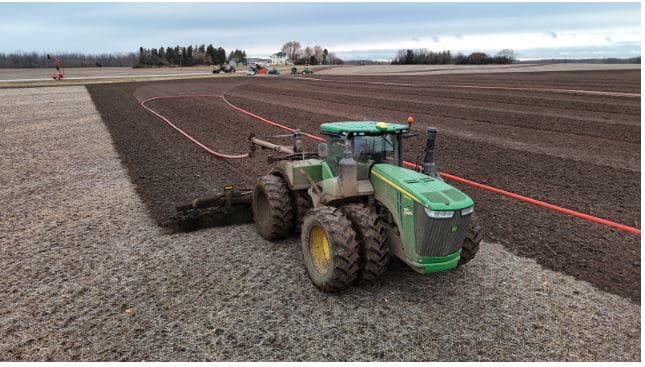
Field application of liquid manure using drag hose equipment to protect soil structure and improve nutrient efficiency
Efficiency
Dragline systems allow continuous flow—no stopping to refill tanks. This dramatically increases acres covered per hour and reduces labor and fuel.
Soil Protection
Unlike heavy manure tankers that cause ruts and compaction, drag systems keep nearly all the weight off the field. This preserves soil structure and supports healthier root development.
Improved Nutrient Use Efficiency
Precise flow control ensures manure is placed evenly. Injection systems place nutrients directly in the root zone, increasing crop uptake.
Reduced Odor and Runoff
Subsurface application significantly reduces odor and the risk of nutrients washing into waterways.
Recommendations for Selecting the Right Equipment
- Size your pumps correctly based on hose length, elevation, and desired flow rates.
- Choose ha igh-quality polyurethane layflat hose that resists abrasion and chemical wear.
- Ensure your hose length matches your field layout to minimize equipment moves.
- Select an application unit that fits your soil type, crop system, and required application depth.
Long-Life Care and Maintenance
Routine care extends equipment life and reduces unexpected downtime.
Industry Standard Hose Cleaning
After each job, the drag hoses and supply hose are cleaned by clearing them with compressed air and a cleaning ball (“pig”).
Industry-standard practice involves:
- Pressurizing the hose with air
- Sending a foam or rubber cleaning ball through the hose
- Removing rethe maining manure as the ball travels
- Allowing the hose to be reeled in, lightweight, and ready for storage
This keeps hoses clean internally without adding unnecessary moisture or weight and prepares them for the next job efficiently.
Additional maintenance tips:
- Walk your hoses during setup and teardown to inspect for cuts, scrapes, soft spots, or abrasion points.
- Avoid tight bends, knots, or kinks that stress hose fibers.
- Store hoses out of direct sunlight to reduce UV degradation.
- Check pump seals, impellers, bearings, and drive components regularly.
- Inspect couplers and fittings for leaks or worn gaskets.
Simple, consistent care prevents costly bursts and failures during application.
Conclusion
Drag hose manure equipment allows modern farmers to apply nutrients faster, safer, and with less compaction than tank-based systems. When high-quality pumps are paired with dependable supply hose, drag hose, and a well-matched application toolbar, the system delivers reliable performance year after year. The right equipment saves time, improves soil health, increases nutrient efficiency, and boosts overall farm productivity.
From pumps to injection toolbars, understand every key part of a high-performance drag hose system. Share this knowledge on Facebook and help others improve manure management with modern technology.
Frequently Asked Questions
Q1: How often should manure pumps be serviced?
Before and after each application season, pumps should be inspected for seal wear, impeller condition, bearing noise, and frame integrity.
Q2: Can a drag hose be used on all soil types?
Yes. With the correct application tool, dragline systems work on most soil types. Injection tools are often preferred for lighter soils.
Q3: How long should my drag hose be?
Measure the distance from your manure storage to the farthest point you need to reach. Add extra length to avoid stressing the hose during turns or obstacles.
Q4: Are manure pumps difficult to operate?
Modern pumping systems are designed for ease of use. Once flow and pressure are set, the system runs very consistently.
Q5: What are the main advantages of drag hose application?
- Much faster application than tankers
- Minimal soil compaction
- Better nutrient placement
- Reduced odor
- Lower fuel and labor costs