Manure Tanker for Sale vs. Drag Hose Systems: Which One Wins for Large-Scale Operations?
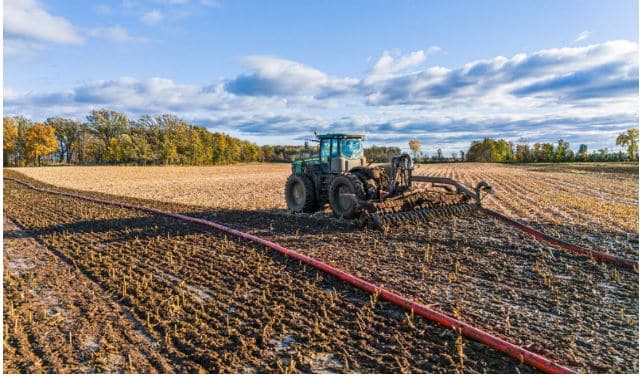
Modern agricultural manure equipment using drag hose systems improves efficiency, soil protection, and nutrient control
Agricultural Manure Equipment
Large livestock operations regularly reassess manure handling strategies as volumes grow and field demands change. Many begin with the best manure tanker for sale because it is familiar and mobile, making it a common choice in Agricultural Manure Equipment planning. Others transition to drag hose systems to improve efficiency and reduce soil impact. At scale, the decision comes down to acreage layout, labor availability, soil protection, and long-term operating cost. Choosing the right system directly affects productivity, compliance, and operational stress.
Needs for Large-Scale Manure Application Understanding
Large operations move high volumes of manure within limited application windows. Equipment must apply nutrients efficiently without delaying planting or harvest schedules. Soil conservation becomes increasingly important as traffic increases. Repeated passes with heavy equipment elevate compaction risk, reducing yield potential and increasing runoff. Operators look for systems that balance speed, control, and field access—those factors ultimately determine which approach performs best.
How Do Manure Tankers Work On Big Farms
Manure tankers remain widely used because of their mobility and flexibility. They can transport manure directly from storage to distant fields without a complex setup. Tankers work well when acreage is dispersed or terrain varies. This adaptability appeals to operations with remote fields or frequent field changes.
However, fully loaded tankers exert significant ground pressure. Each pass increases compaction risk, especially under moist conditions. Refill cycles also slow productivity, as time is lost traveling back and forth to storage. As daily volume increases, these inefficiencies become more pronounced.
Cost Considerations of Tanker Ownership
The initial purchase price often makes a manure tanker for sale attractive. Ownership feels straightforward and familiar. What is less obvious are the ongoing costs that accumulate over time. Fuel consumption rises with hauling distance and load size. Labor hours increase with transport time. Tires, axles, brakes, and suspension components experience constant wear.
As volume grows, maintenance costs escalate. Road travel accelerates wear, and downtime increases. Over multiple seasons, total ownership cost frequently exceeds early expectations, particularly for high-volume operations.
Large-Scale Application Is Different: Drag Hose Systems Alter the Equation
Drag hose systems move manure through hoses directly from storage to the field. Pumps provide continuous flow, eliminating hauling cycles. This dramatically increases daily application capacity. Fields are covered with fewer passes, reducing traffic and compaction.
Once planned and set up, drag hose systems operate efficiently over large, adjacent acreage. They are especially effective for centralized storage systems and operations applying high volumes within short windows. Distance becomes less limiting when hose layouts are properly designed.
Mid-Operation Efficiency Comparison
Efficiency differences become clear during peak application periods. Tankers perform well on smaller or scattered fields but struggle to maintain pace when volumes spike. Drag hose systems excel during high-demand periods by maintaining continuous flow and consistent output.
Labor requirements differ as well. Tankers require operators for hauling and refilling. Drag hose systems typically need fewer operators once deployed, allowing crews to cover more acres per day with lower fuel consumption.
The Impact of Soil and Field Conditions Applies. I Have to Add a Couple of Qualifications.
Soil conditions strongly influence system performance. Wet or soft soils are vulnerable to damage from heavy loads. Under these conditions, tankers often cause rutting and compaction. Drag hose systems reduce ground pressure by eliminating repeated passes from loaded equipment.
Field slope also matters. Tankers can become unstable on uneven terrain, increasing safety risks. Drag hose systems allow for controlled flow and adaptable routing, improving safety and application consistency across varying landscapes.
Daily Operations: Flexibility or Speed?
Tankers offer flexibility for operations with widely dispersed fields. Moving between locations is simple and requires minimal setup. This makes them suitable for farms with remote acreage.
Drag hose systems prioritize speed and efficiency. They perform best on large, nearby fields where setup time is offset by high application rates. Some operations use both systems—tankers for distant fields and drag hose for core acreage—maximizing overall efficiency.
Charting Long-Term Growth with Investment Planning
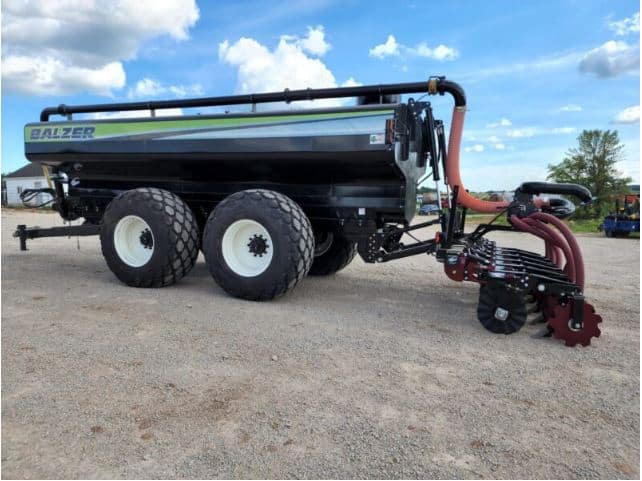
A manure tanker for sale, offering mobility and versatility for liquid manure hauling on farms with scattered acreage
Expansion plans should guide equipment decisions. Short-term savings can hide future limitations. Large operations need systems that scale without adding excessive labor or maintenance. Drag hose systems accommodate higher volumes without increasing hauling demands, keeping energy use predictable.
Tank-based systems often require fleet expansion as volume grows. More units mean more operators, maintenance, and coordination. Long-term scalability favors systems that increase output without multiplying resources.
Environmental and Regulatory Considerations
Many regions impose nutrient application limits and require accurate rate control. Drag hose systems provide consistent flow and precise application rates. Tankers depend more heavily on operator calibration and field conditions, increasing variability.
Improved control reduces runoff risk and supports compliance with environmental regulations. Consistency becomes increasingly important as operations scale and oversight increases.
Concluding Thoughts for Big Operations
Both systems serve specific roles in liquid manure transport. The better choice depends on acreage layout, manure volume, and long-term growth plans. A manure tanker for sale remains practical for light to moderate volumes and remote fields. Drag hose systems outperform tankers when speed, soil protection, and high-volume efficiency are priorities. For large-scale operations, the system that reduces traffic, controls cost, and scales smoothly usually delivers the greatest return in liquid manure transport.
Choosing the right Agricultural Manure Equipment can make or break large farm efficiency. Learn how manure tankers and drag hose systems compare for cost, soil protection, and scalability. Read the full guide on Facebook and apply smarter.
Frequently Asked Questions
What is the highest-capacity manure application system per day?
Drag hose systems handle larger volumes through continuous flow.
Are tankers better for small or remote fields?
Yes, tankers offer easier access to dispersed acreage.
Which option reduces soil compaction the most?
Drag hose systems minimize ground pressure and field traffic.