
The Complete Guide to Selecting the Perfect Manure Hose for Maximum Farm Efficiency
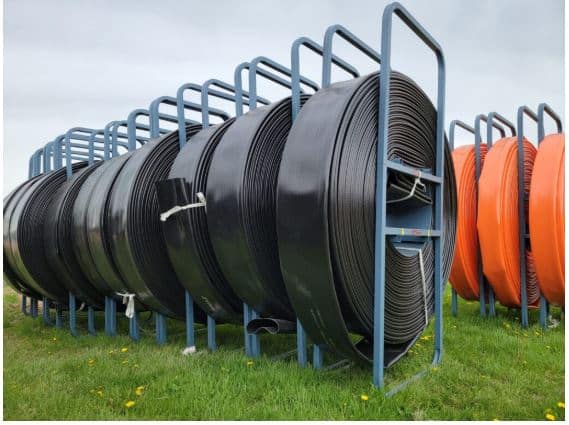
Ensure smooth manure application with properly stored hoses. Reliable performance every time.
Perfect Manure Hose
Every spring, dairy and livestock producers know the pressure of manure application season. Fields are ready, pumps are primed — and then it happens: a failed Manure Hose in the middle of a dragline run. Suddenly, what should have been a productive application window turns into days of downtime, emergency repairs, and lost revenue. Selecting the Perfect Manure Hose isn’t about grabbing the cheapest option on the shelf. It’s about understanding how this single piece of equipment impacts your entire nutrient management system — from pump performance to soil protection to your bottom line.
Why You Care More Than You Think About Your Choice of Manure Hose
Most operators don’t think much about their Manure Hose until it fails. Unfortunately, by that point, the cost is already high.
In a dragline system, the Manure Hose connects your lagoon or pit to the toolbar in the field. If that hose ruptures, kinks, or leaks under pressure, your pumping operation stops immediately. Every minute of downtime during application season matters.
A high-quality Manure Hose ensures:
- Consistent flow from your liquid manure pump
- Reduced strain on equipment
- Minimal nutrient loss
- Fewer emergency shutdowns
When your hose performs reliably, your entire manure management plan runs smoothly.
The Hidden Cost of Cheaply Priced Hoses
Lower-cost hoses may reduce upfront expense, but they rarely hold up under real-world dragline conditions. Budget hoses often:
- Crack in freezing temperatures
- Fail at couplings under pressure
- Wear prematurely from abrasion
- Delaminate internally after heavy use
In contrast, a premium Manure Hose can last five to ten seasons when properly maintained. While the initial investment is higher, the cost per season is significantly lower — especially when you factor in reduced downtime and fewer replacements.
Replacing a hose mid-season costs more than just equipment — it costs application windows, labor hours, and sometimes yield potential.
The Construction and Materials of Hose Manure
Not all Manure Hose products are built the same. Materials and construction determine durability, flexibility, and resistance to field conditions.
PVC, Polyurethane, and Rubber
Rubber hoses offer excellent flexibility and chemical resistance. They perform well in temperature extremes and handle abrasion from rough terrain.
PVC hoses are lighter and easier to handle, but may become brittle in cold weather and crack under repeated stress.
Polyurethane (TPU) hoses are widely used in modern dragline systems. They combine lightweight handling with high durability, UV resistance, and strong abrasion performance. TPU construction is common in premium layflat and drag hose systems.
Each material has advantages, but for high-volume dragline manure application, reinforced TPU hoses are often preferred.
Reinforcement Layers Matter
Single-layer hoses may work for low-pressure applications, but modern liquid manure systems require multi-layer construction.
A reinforced Manure Hose typically includes:
- Woven high-tenacity polyester reinforcement
- Extruded TPU layers bonded through the weave
- Strong outer abrasion-resistant cover
Reinforcement prevents bulging, stretching, and rupture under pressure in an Agricultural Drag Hose. It also significantly extends Agricultural Drag Hose life when dragging across fields, gravel lanes, and headlands. The difference between a two-season Agricultural Drag Hose and a ten-season Agricultural Drag Hose often comes down to reinforcement quality.
How to Size Your Manure Hose
The size of your Manure Hose directly affects flow rate, pump efficiency, and fuel consumption.
If the hose diameter is too small:
- Friction loss increases
- Pump strain rises
- Fuel use climbs
- Flow rate drops
Matching hose diameter to your liquid manure pump capacity is essential.
Common Diameter Options
- 4-inch Manure Hose – Suitable for smaller operations or shorter runs
- 5-inch Manure Hose – Common for medium-sized dairy operations
- 6-inch and larger Manure Hose – Ideal for high-volume, large-acreage dragline systems
Larger diameters allow higher gallons-per-minute flow with less pressure loss, improving overall efficiency.
Connection Systems and Couplings
Even the strongest Manure Hose can fail if the couplings are weak. Hose connections are critical in dragline systems operating at high pressure.
Quick-Connect and Cam-Lock Systems
Quick-connect couplings reduce setup and teardown time. They’re ideal for operations frequently moving between fields.
Cam-lock fittings provide secure, pressure-rated connections. When properly maintained, they offer reliable sealing and reduced leak risk.
Always ensure fittings match the hose’s pressure rating and inside diameter to prevent blow-offs or leaks during pumping.
Maintenance of the Hose to Achieve Maximum Life
Even the best Manure Hose requires proper care to reach its full lifespan.
Post-Season Storage
- Clear the hose completely after use using proper line-clearing methods
- Avoid leaving manure residue inside, which accelerates material breakdown
- Store hoses out of direct sunlight to reduce UV exposure
- Avoid tight coils that create stress points
Regular inspection of couplings, reinforcement layers, and wear areas helps identify issues before failure occurs.
The Key Purchasing Characteristics
When comparing Manure Hose options, focus on these essential specifications:
- Pressure rating – Minimum 150 PSI for most dragline systems
- Abrasion resistance – Critical for field-drag applications
- Chemical compatibility – Resistant to ammonia and manure acids
- Reinforcement construction – Multi-layer woven reinforcement preferred
- Warranty coverage – Reputable manufacturers stand behind their product
The right Manure Hose is not just a consumable — it’s a long-term operational investment.
Conclusion
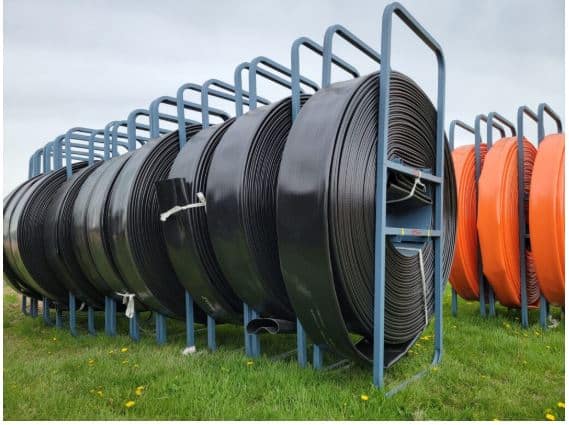
Invest in durable, high-quality manure hoses to minimize downtime and improve field application efficiency.
Selecting the right Manure Hose is not complicated, but avoiding Manure Hose Failure does require understanding your pumping system, acreage, terrain, and manure volume.
When paired correctly with your liquid manure pump and toolbar, a high-quality Manure Hose transforms manure application from a stressful seasonal risk into a smooth, efficient operation.
Investing in durable equipment today protects your application window, your soil, and your profitability for years to come.
Visit our Facebook page to stay informed about premium Manure Hose innovations, field application best practices, and exclusive farm equipment insights.
FAQs
FAQ 1 — How do I choose the right manure hose for my farm?
Choose a Manure Hose based on pump capacity, field distance, terrain conditions, and manure volume. A reinforced, pressure-rated hose designed for dragline use will provide the most consistent performance.
FAQ 2 — What size manure hose is best for efficient manure application?
4-inch hoses work for smaller systems, 5-inch hoses are common for mid-sized farms, and 6-inch or larger hoses support high-volume dragline operations with reduced friction loss.
FAQ 3 — How long does a high-quality manure hose typically last?
With proper care and storage, a premium Manure Hose can last five to ten seasons, depending on terrain and usage intensity.
FAQ 4 — Why are reinforced manure hoses important for farm efficiency?
Reinforcement prevents bulging and rupture under pressure, maintains flow rates, and reduces downtime during critical application windows.
FAQ 5 — How can proper maintenance extend manure hose lifespan?
Clearing the hose after use, storing it out of UV exposure, inspecting couplings regularly, and avoiding tight stress bends will significantly extend service life.